







Traditional freeze dryers rely on HFCs (hydrofluorocarbons): potent greenhouse gases with global warming potential in the thousands. HFCs, also known as F-gases, trap heat in the atmosphere far more effectively than CO2, making them a disproportionate contributor to climate change relative to the volume used.
To help reduce greenhouse gas emissions and chemical pollution, the European Union has implemented strict regulations around refrigerants.
EU F-Gas Compliance in the Lab
What EU 2024/573 means for your freeze dryer
For labs operating freeze-drying equipment in or selling into the EU, the refrigerants inside the unit are now a compliance variable. EU 2024/573 places strict limits on the use, handling, and end-of-life disposal of high-GWP (Global Warming Potential) F-gases. Because most traditional freeze dryers were built around high-GWP refrigerants, they now face increasing restrictions on servicing, refilling, and operation under this new regulation.
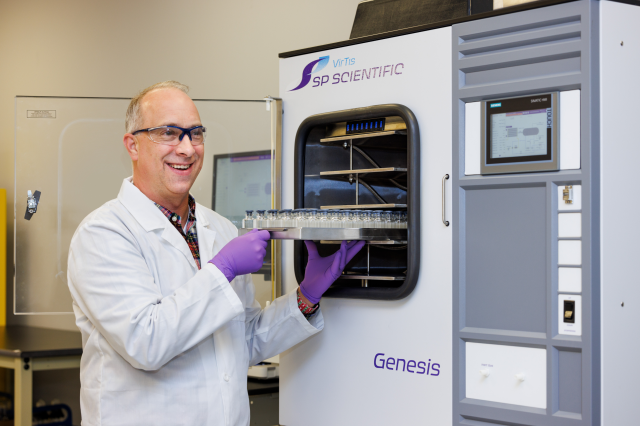
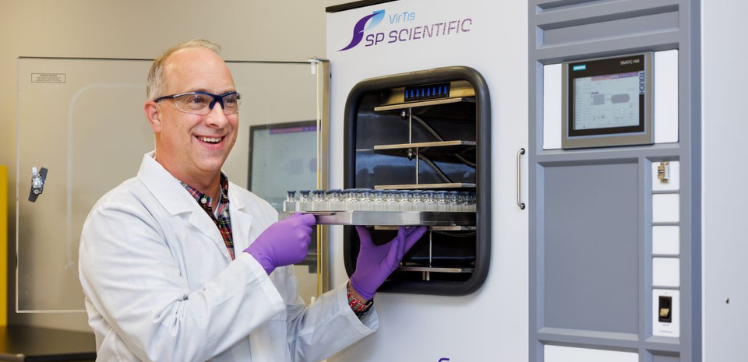
Switching to a freeze dryer with lower-GWP refrigerants, like the VirTis Genesis 30, VirTis Ultra Prime 30, or VirTis Ultra Prime 50, is one of the most straightforward ways labs can not only reduce their environmental impact but also maintain EU 2024/573 compliance.
What We Offer
SP’s EU 2024/573 compliant freeze dryers
The VirTis Genesis 30, VirTis Ultra Prime 30, and VirTis Ultra Prime 50 all use R-1270 (propylene) and R-170 (ethane), which have GWPs of 2 and 6, respectively. Each of our lower-GWP freeze dryers is engineered for safe F-gas containment and supports end-of-life refrigerant recovery and reclamation as required by the regulation.
In addition to EU 2024/573 compliant refrigeration systems, all three units deliver enhanced cooling capacity, with shelf temperatures as low as -67 °C on the VirTis Genesis 30 and VirTis Ultra Prime 30, and -85 °C on the VirTis Ultra Prime 50. Smooth-wall condensers reduce turnaround time between cycles, and the LyoLogic HMI provides intuitive process control with a 21 CFR Part 11 compliance-ready version for regulated pharmaceutical environments.
| VirTis Genesis 30 | VirTis Ultra Prime 30 | VirTis Ultra Prime 50 | |
|---|---|---|---|
| condenser capacity | 30 L | 30 L | 50 L |
| lowest shelf temperature | ≤ -67 °C / -70 °C | ≤ -67 °C / -70 °C | -85 °C |
| shelf temperature range | -55 °C to 65 °C | -55 °C to 65 °C | -55 °C to 65 °C |
| number of shelves | 3 standard, up to 6 | 8 standard, up to 15 | 8 standard, up to 15 |
| configuration | standard or cleanroom | standard or cleanroom | standard or cleanroom |
| refrigerants | R-1270 (propylene), R-170 (ethane) | R-1270 (propylene), R-170 (ethane) | R-1270 (propylene), R-170 (ethane) |
| refrigerant GWP | 2 and 6 | 2 and 6 | 2 and 6 |
Frequently Asked Questions
Common questions about F-gas compliance and freeze-drying equipment
What is the EU F-Gas regulation?
EU 2024/573 regulates the use, handling, and end-of-life disposal of fluorinated greenhouse gases in equipment, including laboratory freeze dryers. It sets requirements for leak checks, refrigerant recovery, and the transition to lower-GWP alternatives.
Why are HFC refrigerants being phased out?
HFCs have high global warming potential and are a significant source of greenhouse gas emissions. EU 2024/573 progressively restricts their use across industries in favor of lower-impact alternatives.
What refrigerants do the VirTis Genesis 30, VirTis Ultra Prime 30, and VirTis Ultra Prime 50 use?
R-1270 (propylene) and R-170 (ethane), with GWPs of 2 and 6, respectively.
Does switching to compliant refrigerants affect freeze-drying performance?
No. The VirTis Genesis 30, VirTis Ultra Prime 30, and VirTis Ultra Prime 50 all deliver the same shelf temperature range, condenser performance, and process control as their predecessors.
Who is responsible for F-gas compliance in a lab setting?
Under EU 2024/573, users are responsible for mandatory leak checks and F-gas recovery at end-of-life. Service must be carried out by certified technicians.
Browse the Full Range
Learn more about what sets our freeze dryers apart, and view specs, dimensions, and configuration options for all VirTis freeze dryers.