




How Does Freeze-Drying Work?

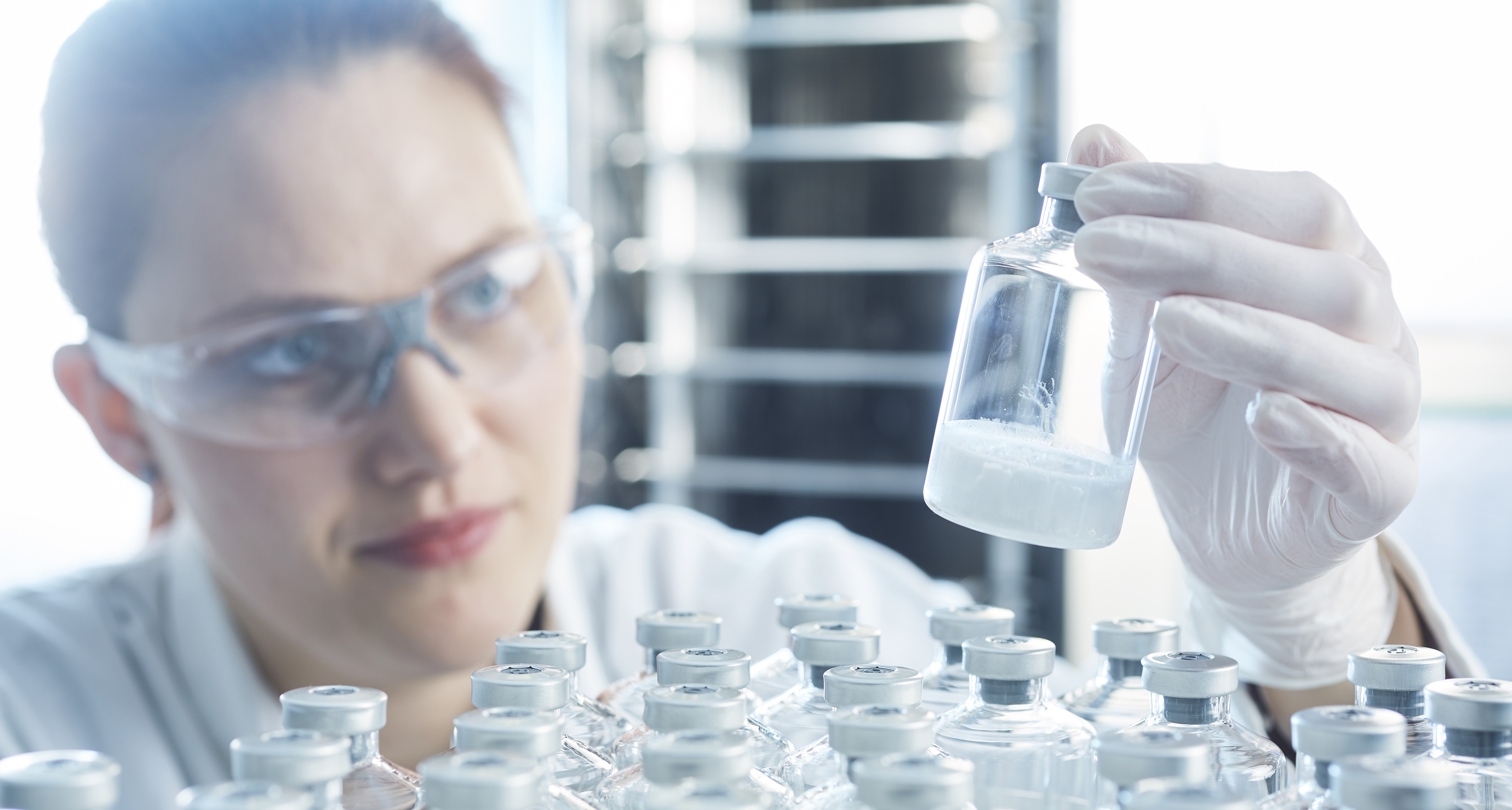
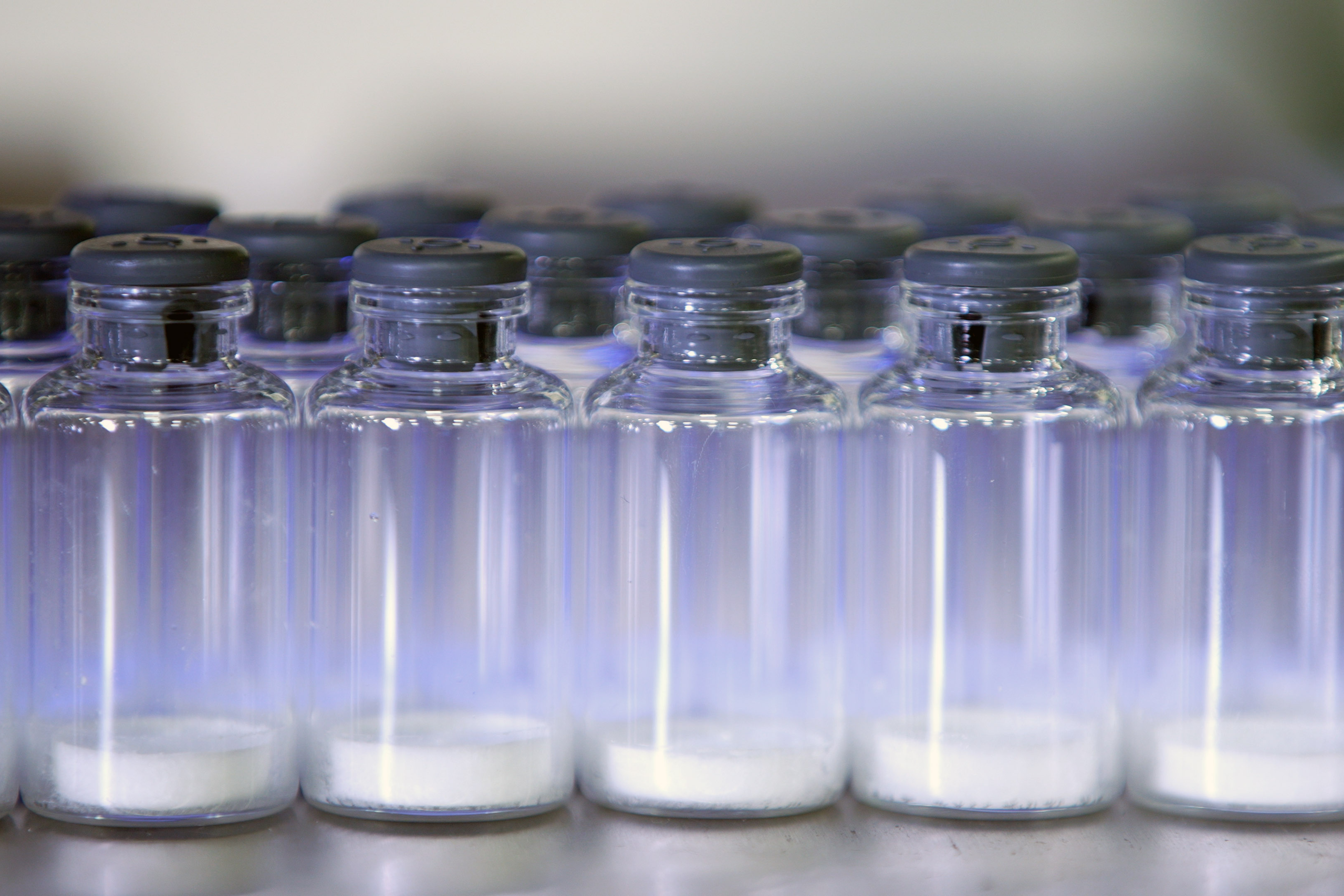
Freeze-drying removes water from a frozen product in two steps: sublimation, where frozen water converts directly into vapor under vacuum without passing through a liquid phase, and desorption, which removes the bound water molecules that sublimation alone cannot reach. What remains is a dry, stable product with its structure and potency intact.
Each stage of the process has its own parameters, and the decisions made at each one affect the next. Getting them right is the difference between a product that dries successfully and one that collapses, takes longer than it should, or degrades in storage.
Stage 1: Freezing
The product must be completely frozen before vacuum is applied
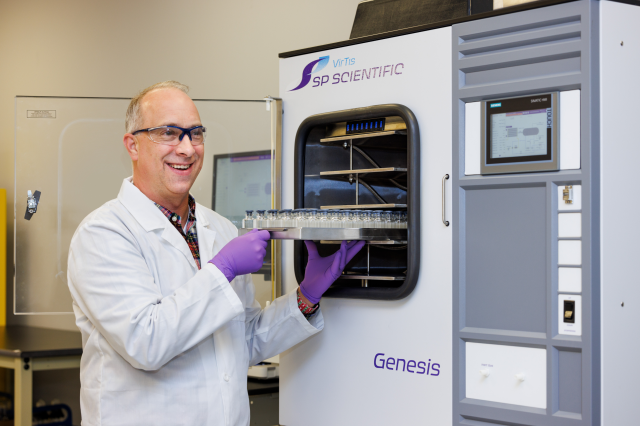
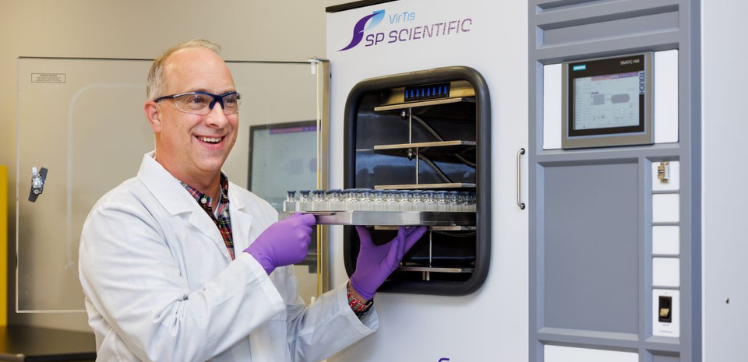
The first stage of the freeze-drying process is freezing the product completely. This step is critical: if the product is not fully frozen when the vacuum is applied, unfrozen material can expand outside of its container, losing its structure and making it impossible to freeze dry properly. In a shelf freeze dryer, like the VirTis Genesis 30, this is done on temperature-controlled shelves inside the unit. In a manifold freeze dryer, like the VirTis Freezemobile®, the product is frozen in a separate piece of equipment and then attached to the manifold.
The freezing stage also determines ice crystal size, which affects how fast primary drying, the next stage, proceeds. Larger crystals leave behind wider channels in the dried product as they sublime, allowing water vapor to escape more easily and speed up drying. Annealing, or cycling the product temperature up and back down after initial freezing, is a common technique for encouraging larger crystal growth.
Stage 2: Primary Drying
Sublimation removes the bulk of the water
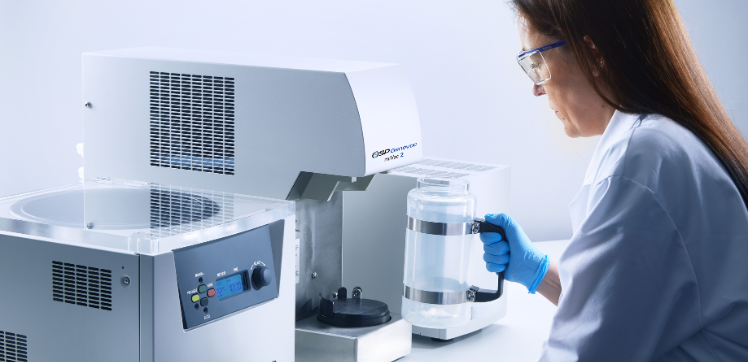
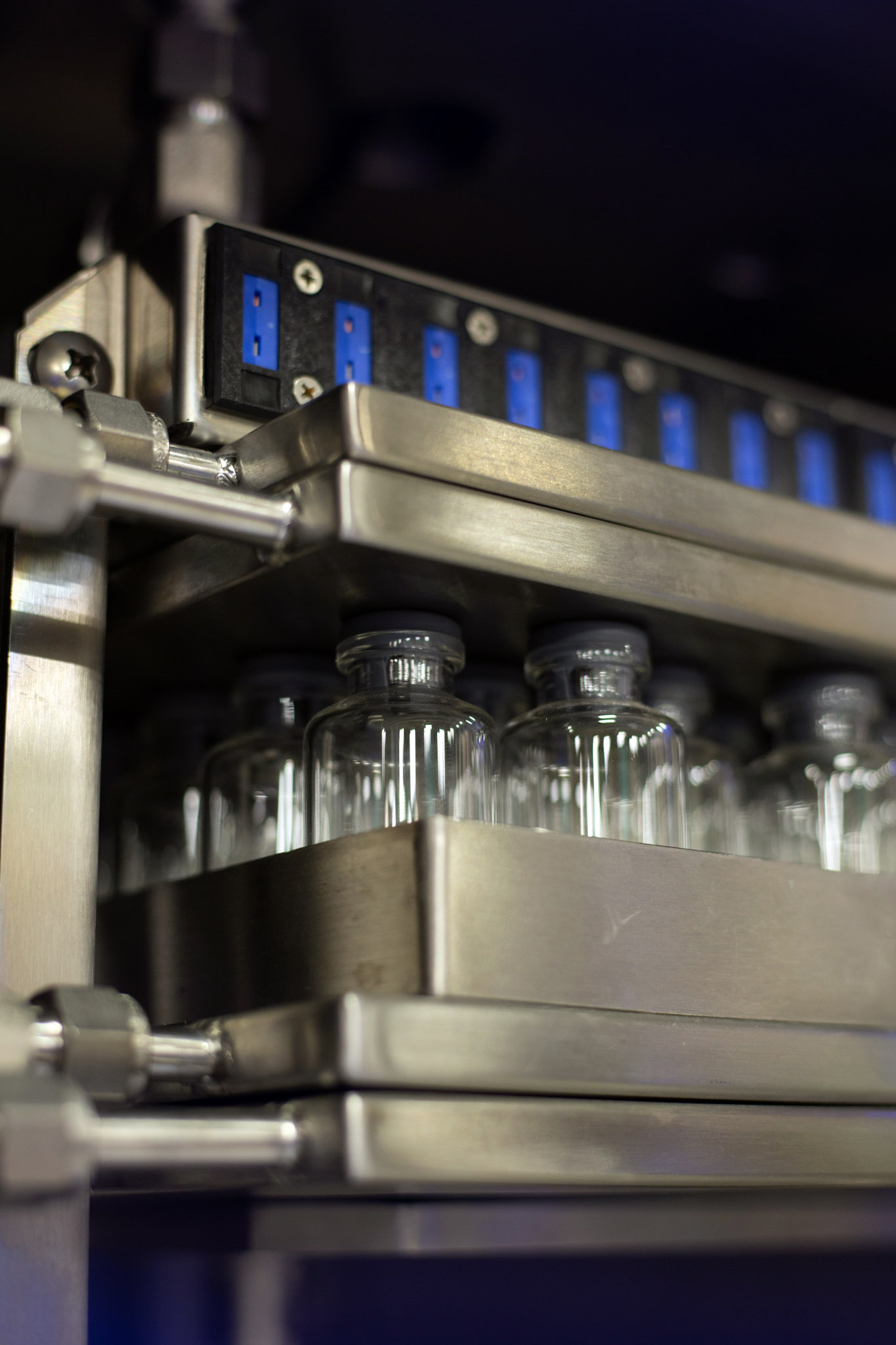
Primary drying is the sublimation phase where the bulk of water is removed from the product. The product is placed under a deep vacuum and heat energy is applied to the shelves, driving ice to convert directly to vapor. That vapor then migrates to the condenser, where it refreezes and accumulates until the end of the cycle.
Importantly, primary drying must be conducted below the product’s critical collapse temperature, or the point above which the frozen matrix softens and the product structure fails.
But, while drying at too high a product temperature causes collapse, drying at too low a product temperature makes the process unnecessarily slow. Each 1 °C increase in product temperature can decrease primary drying time by 13%, so knowing your collapse temperature and staying as close to it as safely possible is the most impactful way to shorten your cycle.
13%
reduction in primary drying time per 1 °C increase in product temperature
5-10%
typical residual moisture content at the end of primary drying
100-200 mTorr
most common vacuum range during primary drying
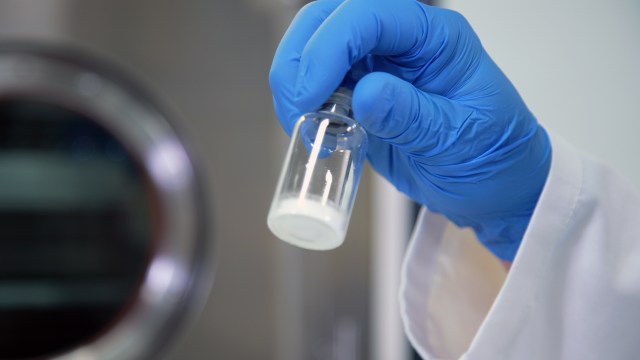
At the end of primary drying, the product appears dry; however, moisture content is still typically in the 5-10% range due to bound water molecules that are chemically adsorbed to the product and cannot be removed by sublimation alone. To more fully remove moisture from the product, desorption is then used.
Stage 3: Secondary Drying
Desorption removes the remaining bound water
Secondary drying removes the bound water that sublimation cannot reach. Since all the free ice has been removed during primary drying, the product temperature can now be raised considerably for most products without risk of melting or collapse. At these elevated temperatures, desorption of bound water proceeds much more quickly.
Secondary drying continues until the product reaches its target moisture content, typically between 0.5% and 3%. In most cases, drier products have longer shelf lives, but certain complex biological products can actually become too dry for optimum storage results, so the endpoint needs to be defined for each specific product.
Frequently Asked Questions
Common questions about the freeze-drying process
What is sublimation in freeze-drying?
Sublimation is the phase change where a solid converts directly to a vapor without first becoming a liquid. In freeze-drying, ice sublimates to water vapor under vacuum when heat energy is applied to the shelves. That vapor then migrates to the condenser, where it refreezes.
Why does freeze-drying take so long?
Primary drying must be conducted below the product’s critical collapse temperature, which limits how much heat can be applied and how fast sublimation can proceed. Each 1 °C increase in product temperature can decrease primary drying time by 13%, so cycle time is directly tied to how precisely that temperature limit is characterized and managed.
What is secondary drying in freeze-drying?
Secondary drying is the stage that follows primary drying. It removes bound water molecules that sublimation alone cannot reach, through a process called desorption. The shelf temperature is raised — typically to 30 °C to 50 °C — to drive desorption and bring residual moisture down to the 0.5–3% range required for long-term stability.
What is collapse temperature in freeze-drying?
The collapse temperature is the critical threshold above which a product softens, loses its structure, and collapses during primary drying. For amorphous products it corresponds to the glass transition temperature. Primary drying must be conducted below this temperature to produce a well-formed, stable dried cake.
Does SP offer freeze-drying training or resources?
Yes. SP offers Remote Freeze-Drying Training and Hands-On Training Opportunities for operators at any stage of their freeze-drying journey. For a deeper technical foundation, the Basic Principles of Freeze-Drying white paper covers the full lyophilization process in detail, including equipment, cycle development, and scale-up considerations.
Read the Full Paper
The complete Basic Principles of Freeze-Drying white paper covers the lyophilization process in detail, including equipment, cycle development, and scale-up considerations.