





Freeze-Drying Basics (Part Six): Optimization, Scale-Up & Product Stability

In the previous article, primary and secondary drying were described as the steps that remove free and bound water from a freeze-dried product. After drying is complete, attention turns to process optimization, scale-up, and long-term product stability.
In addition to designing a recipe that successfully dries a product, it is also extremely valuable to optimize (shorten) the length of the cycle, especially if there is potential for process repetition or scale-up for production. Freeze-drying can be a multi-day process. The cycle time can often be substantially reduced by investigating several factors:
- Freezing and annealing — maximize crystal size and crystallization to increase drying rates
- Thickness of product — water vapor molecules experience resistance as they exit from the dried portion of the product; thinner samples yield less resistance to vapor flow and lead to faster drying
- Critical collapse temperature — this is the most important piece of information for cycle optimization; the ability to run primary drying at higher product temperatures greatly reduces drying time by creating a larger pressure differential between the vapor pressure over ice in the product and the pressure at the condenser; each 1 °C increase in product temperature can decrease primary drying time by 13%
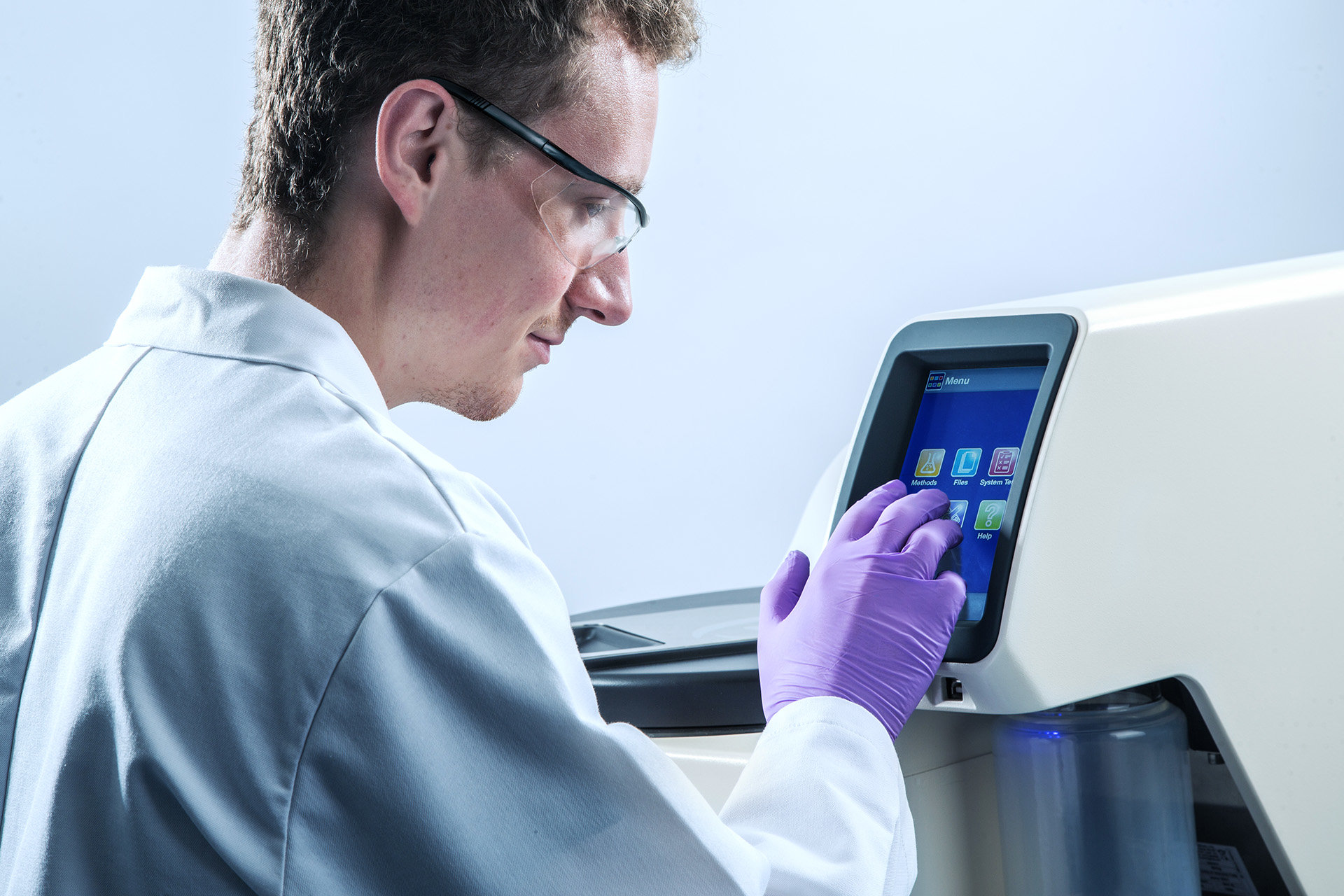
Cycle optimization using eutectic/collapse temperature information requires an iterative approach of taking real-time measurements of the product temperature during primary drying and then making corresponding adjustments to the shelf temperature settings. This can be accomplished manually using product thermocouples or, if drying in vials, an automated SMART™ system can be used.
Process Scale-Up to Production Considerations
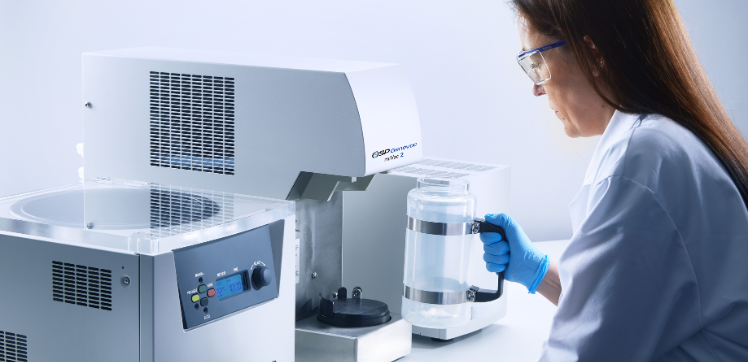
Laboratory pilot-sized shelf freeze dryers are often used to develop a cycle to be used for process scale-up to a larger production sized unit. Similarity in heat transfer characteristics and shelf temperature uniformity is important to ensure that a lyophilization process developed in the lab can be successfully transferred to a production freeze dryer.
One of the most important factors to consider is the difference between the cleanroom environment typical of a production freeze dryer and the lab environment that most pilot units are operated in. The difference in particulates can greatly affect product freezing and ice crystal size.
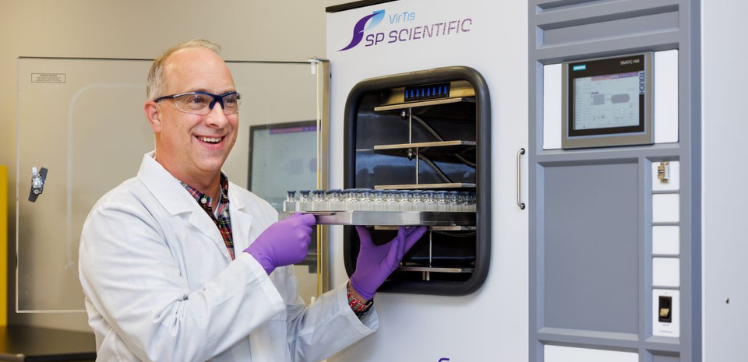
Production freeze dryers are usually configured for operation in a cleanroom environment and can have the ability for clean-in-place (CIP) and steam sterilization (SIP). Another production consideration is process compliance to US FDA regulation 21 CFR Part 11, if required. This regulation requires certain standards of electronic data security.
Storage of Dried Product
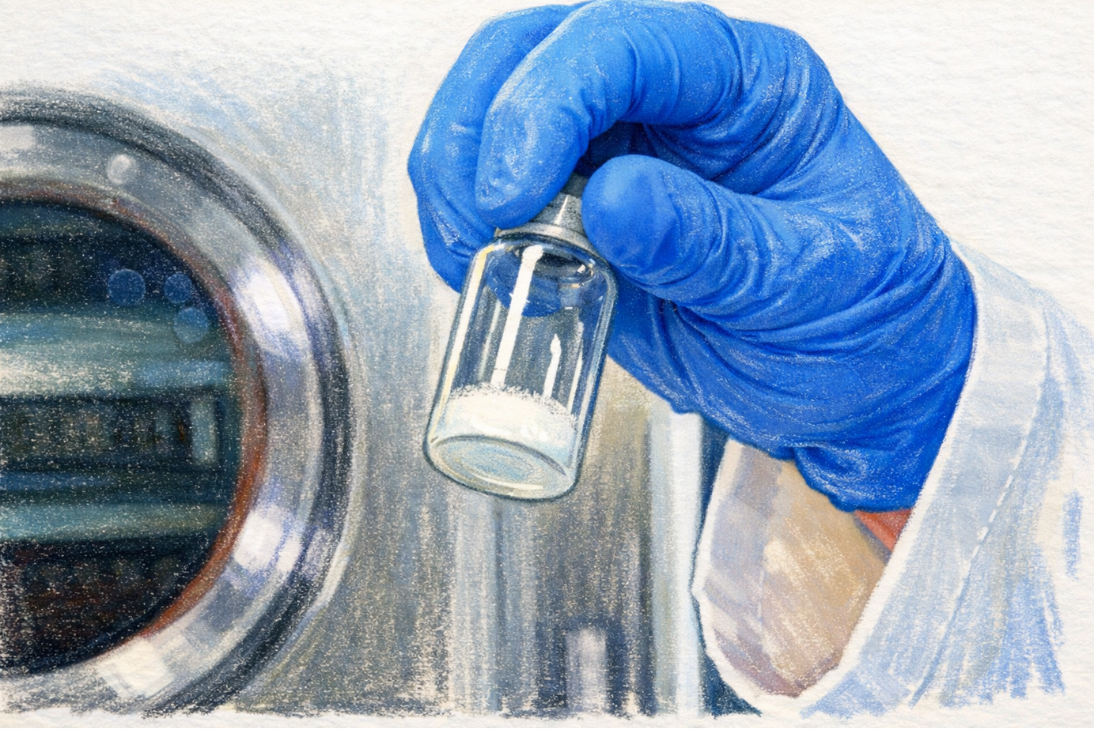
Lyophilized products are extremely hydroscopic, and they must be sealed in airtight containers following freeze-drying to prevent rehydration from atmospheric exposure. Freeze dryers can be configured with a “stoppering” capability to seal the product while it is still under partial vacuum inside the unit. Typically, stoppering is done on vials with partially inserted stoppers.
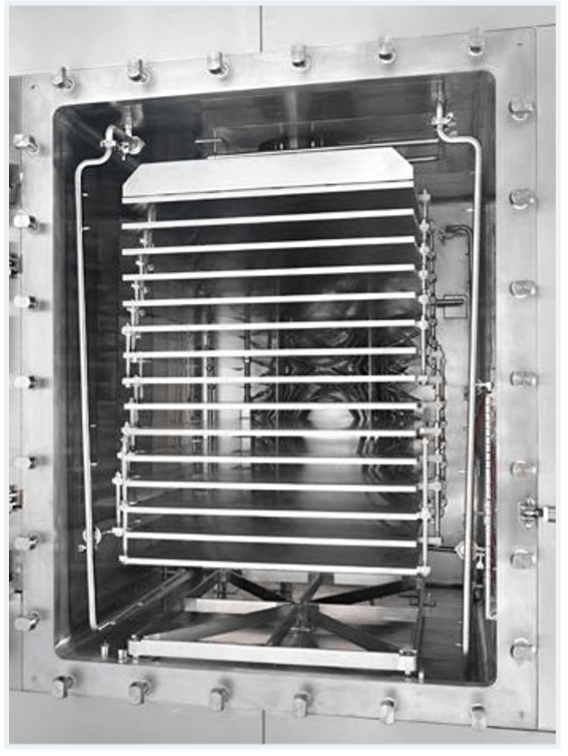
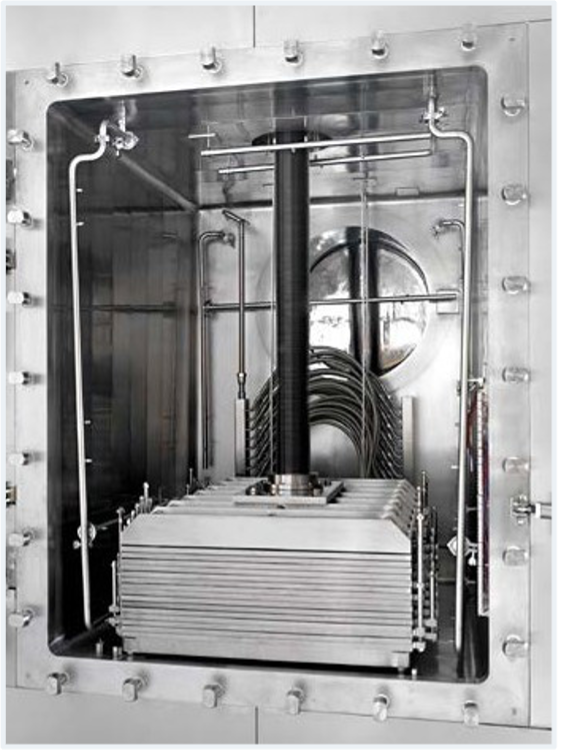
The shelves are collapsed so that each shelf pushes down the vials/stoppers located on the adjacent shelf. It is also common to backfill with an inert gas such as dry nitrogen before sealing/stoppering the product.